Overly wordy title …… in a period of transition of recession which a decade in is showing no real signs of letting up. The death of our high streets? Death of shopping rituals? Death of materialism? With the media highlighting reduced footfall in November shopping and lead up to end of the year etc. Is it the end of the High Street?
HIGHLY UNLIKELY: Our livelihoods as communities have been the post offices, congregating in pubs, meeting up in the shopping high street. The corner shops may be a thing of the past - yet many reclamation entities (be it council recycling centres, industry reclamation centres, or volunteer scavenger crews storing their finds in a safe place for you to visit!) can be a potential part of a 21st century High Street which embodies the circular economy.
The materialism in the western world of the 1970's (products creating false status) and 1980's (making something big out of very little') has spiked our 'waste productivity' with some partical improvement in 1990's and 2000's seeing some consumers demand a need for organic, Fair Trade and fair deal social responsibility products..... yet the waste mountains are still accruing big time!!!
The end point ………….
Waste Food This is not just about 'I did a responsible thing putting my waste food in the caddy' - what if more composting could be done on an individual home basis? Creating 1000's of micro compost producing homes which could make very strong use of the end-product for local community planting projects, or adding more nutrient to your own garden or in-house plant pots. What if communities were the feeding point to local gardening shops to top up their compost/soil requirements as part of their procurement process?
Waste Textiles The 'secret life of landfill' documentary where 1980's garments discarded to landfill look almost brand new (hence they will take a very long time to decompose!) Yet with clothing in contemporary 2010's having a 'shelf life' of barely 3 years before they degrade, become unwoven and quickly discarded …. still much must be done.
Waste White/Grey Goods Now many scarp dealers go around in vans looking for discarded fridges, tv's etc. which they'll recover - sell for parts, or recondition and sell as a whole. Much of this does challenge safety, challenge legalities, or licensing, or safe disposal/recovery protocol - yet if you are able to innovate an angle for improving longevity of products with minimal or zero breakdowns - this will sustain your products. Yet will it sustain industry? As they need customers to keep coming back - the sooner the better …. or is this forced economics that demand buy, buy, buy - not a more socially/environmental acceptable process of buy, use, make it last (forever?) !!!!
Employment: Can posts be created to support the most vulnerable? the homeless? the violated?
The starting point ……...
New economy / new sustained growth / new era of shopping? Many feel 'the young' do everything online, so they'll order 3 pairs of jeans from multiple purchase points - which means possibly 3 different delivery waggons bringing it to your front door - which after you try them on you will discard and return 2 pairs of the jeans. This is a significant amount of fuel/resource to ensure you got what you wanted - 'when back in the day' you'd go into town and have a look at what you wanted to purchase, try it on - do everything there & then in the shop!
Many High Street local shops may claim a reduced footfall compared to previous years and they believe the younger professional demographic is not supporting their businesses as say regular traditional families may have done.
Many shops are leading the way with ZERO packaging, ZERO delivery service, ZERO tolerance for wastage! The chicken and egg scenario plays here with who leads by example - industry/commerce - or the client/customer?
This is a transitional era of the 2020's and 2030's as many discard materialism for social status, yet purchase 'quietly' from strands that offer quality, longevity, ethical sourcing and guaranteed end disposal safety (i.e. zero waste). There is a still a long way to go though on innovating the perfect international formulae of buying/selling/use/disposal/circular economy.
Localisation is the focal point for now, the holistically developed (- or evolved) good practise is understood, categorised then reproduced on a larger nationwide, then international arena. So just focus on your own tiny area (be it village, town or city).
Totally clean procurement, raw extraction, processing, distribution, retail point, disposal life cycle of any product still has a long way to be genuinely zero carbon. Obviously we are a little way off of having electric lorries/trucks - yet they will be mainstream by the 2030's (particularly with pressure groups slowly winning with voicing air toxicity levels in city centres!) - what else can do to improve air quality directly in High Streets? More trees? more planters?
So? The 2020's, 2030's, 2040's are looming ….
What can you do?

A Sustainability Consultancy that focuses on practical sustainable solutions, policies and practices. Suitable for all sizes of organisations, businesses and charities. Please do enquire@davius.co.uk ... and just consider: "Sustainability - Think it ... Make it ... Live it!"
Sunday, 16 December 2018


Thursday, 8 November 2018
7 billion daily bowel movements - a significant threat to global health, peace and natural environment?
Many of us take for granted the use of a flushing toilet. As the World Toilet Organisation has expressed concern and attempting to mobilise higher standards in human sanitation and treating and making use of the waste more effectively.
Natural (or biological) technologies such as Reed Bed Technologies to clean water effluent is one format that modern cultures have looked at in recent decades. Compost Toilets can do significant good for many urban and rural environments which continually produces a compost/soil substitute source for private gardens, public green spaces, community gardens, allotments, small holdings all the way up to large scale agriculture. It may sound like an impossible logistics exercise - yet 7bn daily bowel movements if handled properly could provide a lot of necessary nutrients for our agricultural systems as well as our urban/rural green spaces.
Natural (or biological) technologies such as Reed Bed Technologies to clean water effluent is one format that modern cultures have looked at in recent decades. Compost Toilets can do significant good for many urban and rural environments which continually produces a compost/soil substitute source for private gardens, public green spaces, community gardens, allotments, small holdings all the way up to large scale agriculture. It may sound like an impossible logistics exercise - yet 7bn daily bowel movements if handled properly could provide a lot of necessary nutrients for our agricultural systems as well as our urban/rural green spaces.
The massive infrastructure our water services give us (waste water extraction, clean water delivery, rain water re-direction, flood abatement etc) and yet we still have a long way to go of having a zero emission system and zero waste produced so faeces that does not end up in parks or the beaches.
From low tech practise like Compost toilets to higher end technologies of Japanese toilets that wash your bottom for you - many of the solutions in themselves do use high energy embodied practises of manufacture, use and disposal.
Significant changes in attitudes and practises should be considered in both developed and developing countries. It is one thing that 'poor countries' aspire to practises of richer countries when the more affluent could be using more sustainable, locally sourced and dealt with faeces delivery/distribution processes which will be more low embodied in energy and resource use.
This very insightful video: 'The toilet: an unspoken history' BBC 2012 (which I would have renamed: "7 billion daily turds: can the planet deal with it?") The first half of this video deals with design & social evolution - the latter half is more hard hitting highlighting significant waste problems the world needs to deal with - and solutions are presented.
Now really is the time to give a s#@t about sitting on the thrown/spending a penny!
What can you do?
Thursday, 11 October 2018
Food – high tech & low tech ………. Can all be part of the solution – as we stop the acceleration of our demise ….
The proverbial and literal fires may have been really lit up on 7 BILLION people as the international scientific community believe we must all accelerate efforts to stop global warming.
The real issue is not lack of intelligence, or skills - its a capacity that overwhelms millions of individuals when they think/believe they can not do anything to improve given situations like global warming etc.
Best practise must be shared everywhere - a few billion more trees planted, a few trillion indigenous wildflowers/flora and fauna can be propagated within 24-36 months! Its just about mass un-coordinated voluntary efforts to make it all happen.
Food miles is one of many of the heaviest burdens internationally we suffer. All countries across your world have shown interest in local food growing. One recent example is In LA: Los Angeles (yes California) a pioneering group who have grown the majority of their own food in close proximity of the City of Angels.
Imagine 100,000 locations all over the world doing this? The immediate causal positive impact of reducing fuel/chemical/resource intense use producing less methane/CH4 …. then also adding a few billion baby trees whose teenage years in the 2030's will suck in peta-tonnes of Carbon dioxide CO2.
Every small step can mean so much. Connected communities can mean stronger, peaceful, crime deterring diverse communities of rich culture, sharing skills - sharing responsibility - sharing the international benefits.
This is YOUR time now - not to prove to 7 billion others - yet to prove to yourself your contribution is invaluable!!
What can you do?
Thursday, 24 May 2018
Water Butts – is it really a balance for floods and droughts?
Water Butts – is it really a
balance for floods and droughts?
The worst thing about being human is also the best thing! We don’t react/act proactively until the proverbial shit hits the fan! Yes when it comes to fires, over the years we’ve built our communities to have sprinkler systems, quicker access via route planning for Fire Engines, materials that are more resilient to fires/heat damage etc. Yet all too often we should try and make efforts to deal with problems before they start.
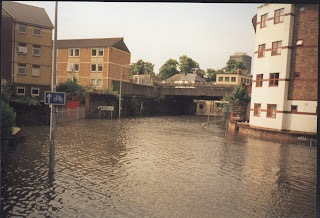 At present UK is having a dry
spell with a lot of bright hot weather of direct sunlight bathing the
countryside and urban areas of Britain. Within a fortnight our agricultural
systems, small holdings, community gardens, back gardens etc. see the early
signs of strain as water disappears quickly and we don’t have sufficient back
up resources.
 When it comes to flooding a more
comprehensive approach should be recommended (not just artificial basic
mechanisms to capture/hold the rainwater). The excellent Transition Chepstow LINK
(part of Transition Town Network) LINK have added in trees to
areas renowned for high flooding (and commuter disruption with it) which has
helped significantly reduce the pooling/flooding areas due to the hundreds of
extra trees grown by the Transition Chepstow volunteers – which has obviously
resulted in absorbing excesses of localised rainwater and reduced the
significant level of local flooding.
The worst thing about being human is also the best thing! We don’t react/act proactively until the proverbial shit hits the fan! Yes when it comes to fires, over the years we’ve built our communities to have sprinkler systems, quicker access via route planning for Fire Engines, materials that are more resilient to fires/heat damage etc. Yet all too often we should try and make efforts to deal with problems before they start.
 At present UK is having a dry
spell with a lot of bright hot weather of direct sunlight bathing the
countryside and urban areas of Britain. Within a fortnight our agricultural
systems, small holdings, community gardens, back gardens etc. see the early
signs of strain as water disappears quickly and we don’t have sufficient back
up resources.
Water saving measures is
something we often forget. Caught up in standard 70-80 hour weeks that many
citizens face up to on a regular basis means our minds are stretched thin
juggling multiple tasks, coupled in recent years in explosion in social media
that stretches us that little bit more. We forget things, priorities jump
queues and non-immediate threats slide down the triage …..
With hot perfect ideal spring
& summers becoming potential droughts – it’s time we put some checks &
balances into play. If it was mandatory in every city/major town that each
household must have a water collection measures – be it;
·
Nature: Water Butts – for gardening, community
gardens and expanded managed green spaces
·
Domestic/office: Rainwater collection for toilet
flushing, showers etc.
·
Industry: mass retention points for cooling etc.
The opportunities are
significant. During drought periods to have a few million litres in water butts
ready to bail us out. It’s not really that hard considering that 1 million
litres = assuming 150 litre water butt capacity = just over 6,600 water butts;
just a few dozen extra Water Butts in every town & city will make a
significant difference. What is London has to add in 10,000 new water butts –
major fresh rain water resource to help us in the hot/dry season!!
Yet what about the opposite and
it floods? Would all these empty water butts help absorb some of the heavy downpours
which does hit UK at times. Yet if the 1 million Water Butts are half full at
the time have they prematurely outlasted their usefulness? Where else can we
put rainwater storage? On every level of high rises? Can City Farms LINK
be centres of clean natural rainwater (harvested) resource? If a transport
accident resulted in contamination hitting the river eco-system; would
1,000,000 Water Butts who are directed to flush into the river system help
dilute the contaminated river? This blog is not presenting solutions – rather
inviting you to think about the logistics of rainwater harvesting, when to
store, when to use, when to utilise in emergency etc.
 When it comes to flooding a more
comprehensive approach should be recommended (not just artificial basic
mechanisms to capture/hold the rainwater). The excellent Transition Chepstow LINK
(part of Transition Town Network) LINK have added in trees to
areas renowned for high flooding (and commuter disruption with it) which has
helped significantly reduce the pooling/flooding areas due to the hundreds of
extra trees grown by the Transition Chepstow volunteers – which has obviously
resulted in absorbing excesses of localised rainwater and reduced the
significant level of local flooding.
COSTS: always the thing we don’t
want to hear! Yet how can you on a basic and very localised start get your
rainwater collection initiative started? Recovery of used/discarded Water Butts
may be one format forward – be it looking at business junkyards or council
skips/recycling centres, using Freecycle LINK, asking amongst your own
community if they are imminently about to thrown any water butts out if you can
freely recover them?
It all starts with small steps.
You may be surprised in your own locale at how many people would wish to get
involved in such a project. Its up to you to reach out and find everyone.
Is
smart-micro-water-grid and analogy or reflective of an
electricity-micro/smart-grid? Can the two work in tandem together – or as a
three with heat-smart-grid, or local-food-smart-grid? Is this all the cusp of
something bigger to come which we all need to initiate in our own areas ……?
What can you do?
Sunday, 24 December 2017
Ready to give up? When something can be made from nothing !! Keep talking, writing, blogging, tweeting ..... sharing!
Too many times we get wrapped up, side-lined and deferred by life. Who would have thought producing 500 words a month as a simple blog would be such a challenge? 24 months has passed since the 'volunteer burn out' entry was produced in January 2016 - and 2018 begins in a few short days ..... A lot can happen in 30 days (as politicians will say "a week in politics is a long time!") yet in 24 months significance rebuilding has been undertaken by Davius and it's ongoing very long term projects from 25 years ago to present ..... the progress is excruciatingly slow - yet when progress is not reported; many assume things are dead - when they are in fact potentially thriving on a micro level.
Would Big Data models of reporting in a few decades be able to show the real in-depth vast dynamics of just one community of 500 - 5000 people? Is reporting in the current day effective in really getting an absolute factful and true account (don't those two cancel each other out?) of what is really transpiring in a given social phenomenon or entity?
This insignificant tiny blog writer has failed the few people who read these blogs by not being consistent with them - as when blogs started in 2011 at least half a dozen were put a year then ..... now what? 1 in 24 months? How did this happen ....? No discipline to allocate 1 hour a month to blog-it-up? Is there any point blogging? Is it supporting the local and global reinforcement that we wish to tackle the massive global challenges of abuse-of-power, wars, trafficking, disclosure, global warming etc - or is blogging about selfish self-promotion - in itself a self-destructive process?
The only thing that can be reaffirmed is that you are NOT alone. What positive 'small thing' you do will have some positive causal impact if you talk to your neighbours, build local relationships and engage with your community; be it families, faith groups, local businesses, local voluntary bodies etc. you will be inspired by the fact that many of them will wish to collaborate - or at least share in the information/news/updates about what is happening in your area! People will continue your efforts from vast distances away from where you originally began the process.
This has been achieved - in districts that are wrongly perceived to be ghetto's - when in fact where individuals have made the effort to go out and find everyone, give them information (like contacts local police, councillor, or health entities - or invitations from community, libraries, voluntary tasks) then build it up into a regular newsletter (hard copy as many are not digitally proficient or have internet access), support the formation of sub groups that can all tackle individual problems in local waste, planning, noise, anti-social activity ..... believe if people are armed with the process to deal with local issues - they can all be empowered to do something about the local problems and create a connected, socially stronger and safer community !! If you believe in the process - you can mobilise a district, encourage everyone to work together - as long as it is done for the spirit of the community; not your own selfish agenda as people will figure it out in the end !!
The immediate challenges we face all have always been at crisis point (global warming, the harvestable soil disappearing in the mid to late 21st Century, starvation, homelessness, crime and anti-social behaviour) - yet quickly forgotten by our immediate problems (all spun from a warped economic model, sense of vacuous appearance focused on vanity not real health, a manipulated media system, aspirations facilitated by social mobility which encourages only falseness, pretentious and snobbery) which has only caused more social decline than social progress. To this it should be encouraged that we actively keep reaching out to each other - communally, locally, globally ... and beyond.
We are all held to account - not by a legal system, Government or council guidelines - yet by our peers - be it community; our friends & families, our neighbours ... the ones that should be there to keep us in check, help us reflect, aspire and ensure we are objectively and fairly moving forward together!
Friday, 29 January 2016
When volunteer burn out culls many prospective strong sustainability initiatives!
This is not a blame game,
although if irrational minds could turn to such activities when people set on
each other. With support that Davius has put behind recent voluntary groups it
was saddening to find a lot of initial links from only 12-18 months ago have
all dissolved.
Why? People being ignorant? Far
from it – the reason a lot of links amongst groups have dissolved is due to
many voluntary entities have sadly dissolved after real efforts in the early
days. For many – the local entities were set up by just one person, and over
several years were maintained by people flying solo. They may have been cheered
on by their community – yet trying to get support off the community with
volunteer contribution being next to zero.
This is not an attack; rather a
reflection with hundreds of thousands of families stretched to their limits the
last ten years, very few can contribute towards local positive initiatives due
to lack of time etc. So regrettably a lot of sustainability/community
initiatives are set up by just one person. Invariably after a few years many
good people across UK give up on their projects. This is a real tragedy as some
of their projects could have really taken us in a new direction. No names – you
can find out who they were in your own locale.
For group collaborations such as Friends
of the Earth, Greenpeace, AECB local groups, Transition Town groups, Community
Food/growing Markets, Community Renewable, Housing Community Projects just to
name a few – it is very hard to maintain core group structures as responsibilities
have to be maintained upon collapsing numbers.
So how to improve this situation?
How will make the sacrifice when so many in this era are so stretched already? What
is the magical solution to improve so many voluntary or community entities?
Is there a magic administration software
package that can stream line the process? With legal frameworks, constitutions,
reminder prompts of meetings – or will this not work in the real world where we
all have responsibilities, setbacks and unpredictable events that sway us.
The only thing we can all do is
persist …. If you have a good idea for human innovation, community process
and/or environmental regeneration – keep at it. You may have the saving grace
that helps the whole country start moving.
However – a warning from the
experienced ones from multiple voluntary initiatives …. A little power for just
one entity within the voluntary group can break the natural progress and
overall group dynamic.
You have been warned ….
All that said and done – on a
positive …. What can you do?
Wednesday, 30 December 2015
A new economy?
As UK goes through a continuous
periods of austerity throughout the remainder of this decade, and the remainder
of the plant has their own practices to deal with their ongoing recession. Even
when economies were ‘good’ many Governments still ran up huge national debts ….
How can these ever be minimised? If ever? Can you really affect your
government? Or is it more feasible and realistic to focus upon your locale?
What can we really do to improve the economy in your local area? Realistically you cannot change something – like a disaster on the other side of the planet. Yet you can affect your own locale for the better – and contribute ideas to how things should be undertaken.
Communities want to be stronger. Too many times in our isolated world where you only know the immediate neighbours on your street and not those ten doors down. This does create some element of disillution where people think they live in challenging areas, ghetto’s or disconnected communities – yet if you reach out and start finding out who your neighbours are? What they think of locale? What would they like to see improved in the area? You can all begin working on a community plan.
Yet how to empower that community? What realistically can you do in 1 year? 5 years? 10 years? 25 years? Could your community be a lifeline that begins creating your pension? A savings plan for the children and grandchildren? With so many people working into their 70’s and 80’s in this day – many people are keen to be better involved in their community. Employment and community initiatives enhance local links for many who feel somewhat disconnected.
What do we need?
Water, food, shelter, sex – the basics. If our local economy provided housing, food, energy and other basic needs (local social good links so that people can actually meet each other) then perhaps our communities would be genuinely stronger.
On the energy front the UK is finally beginning to embrace ‘community owned energy’ (even though some trail blazers started this in UK decades ago and suffered the wrath of backward and archaic systems in life which were long overdue for an overhaul.) and this is something that could really develop local benefits as funds from PV, wind, micro-hydro, CHP, anaerobic generation could really help your locale.
Same goes for housing co-operatives to infuse a much needed demand for real skills in UK (which the skills deficit is heavily cited by many industries – yet we seem to act too little too late to address the skills deficit challenge.) with building, carpentry, electricians, engineers, plumbers, manufacturing, processing etc.
Possibly more importantly than above two is food production. In the face of the recent years flooding problems many have suffered in UK, farms under water etc. we should focus on micro-growing as well as large scale agricultural production (with lesser impacts) and look to creating a new industry of soil integrity support mechanisms.
What do we want?
NO we are not chanting – what do we want? When do we want it? Too much (materialistic demand it would seem) – hence we are in such real trouble with backlash of economic yo-yoing, flooding/droughts, wars etc. etc.
Generally we only react when disaster strikes (a totally normal human trait!) yet what we need is consistency of good practice (and not wait until it’s too late) to address food production, community production, manufacturing, flood/drought reduction, energy black outs, peak oil.
So…..
You’ll all have your opinion on the outcome of COP21 in Paris …. Where do we go from here? Less reliance on technological innovation – more reliance on human innovation.
What can you do?
Wednesday, 15 April 2015
Divestment – great on the large scale – yet what of all the little co-operatives?
Divestment
is a word that has been banded about as a trend in the mid 2010’s and with some
successful campaigns
encouraging industry and Government to support a switch in support towards more
‘sustainable’ resources.
Divestment is important, yet what was holding it back a decade ago in boom periods? After all the media pomp has quietened ….. will we remember the investment in small co-operatives? Or will we look towards the larger impressive projects?
What choice would you make?
Can we really pull all funding away from these ‘bad sources’
of coal burning/oil exploration? Will divestment really make a fundamental
shift in such a short term? It would be naïve to believe that hundreds of
millions of sterlings, Euro’s, Dollars, Yen will switch over in a short amount
of time that the carpet will be pulled under from all these dirty technologies?
Unlikely …..
It may be premature to mention that nuclear and fossil fuels
have ‘lost the race’
as transition is not as easy as many believe. With pension schemes from big UK
firms looking to potentially switch investments towards massive projects such
as Swansea Tidal Lagoon
(and Cardiff and Newport Lagoons) yet what about all the smaller co-operatives
that have been screaming out for funding for the last twenty years? Will they
continue to be overlooked?
There are many heroes that it would not be right to forget
about who pioneered community renewables and investing in local areas yet were
unsuccessful in their initial renewable energy applications at the turn of the
century (Awel Aman Tawe
in Swansea and Arts Factory in
Ferndale) yet hopefully their reinvented practises will flourish this time
around as the 2010’s recognises greater need for co-operatives in renewables,
housing, food, skills etc.Divestment is important, yet what was holding it back a decade ago in boom periods? After all the media pomp has quietened ….. will we remember the investment in small co-operatives? Or will we look towards the larger impressive projects?
What choice would you make?
Sunday, 6 April 2014
Food Waste and resolving our complacency with the wasted food mountain.
The food waste issue is mentioned
in the UK mass media again – it is something we all face on a regular basis.
This time the emphasis is upon the calls for supermarkets to end their BOGOF deals in the interest of reducing the millions of tonnes of food waste.
The BOGOF deals (Buy One – Get One Free) psychologically primes us that we are making great savings when we are out shopping and doubling our purchases for prospectively half the price of costs ….. yet the reality is the food will not be eaten quickly enough and will go off and inevitably end up in the compost bin/black bin.
Perhaps we should ask ourselves: Do I really need to buy this? Or is it an issue of people believing that food is useless once it hits the expiry date? Can we risk keeping food an extra day or two for consumption after the expiry date?
The different sources of information may not always be consistent with each other – yet it is plausible that ten’s of thousands of tonnes of food is wasted each year (by many countries).
What can we do to reduce this waste stream contributor?
Composting is important – in fact: it is critical to return the nutrients to our soils. Yet it should not be abused! The more localised the composting can be done with zero to few miles travelled - If composting was fully comprehensive (where primarily some composting is done on-site of the domestic home, the restaurant, the office place, the college campus etc. then excessive amounts were picked up by council services) then it can be an even more sustainable process for us to support (than sending it long distance to be composted elsewhere.)
Yet to reiterate: please do not abuse composting as a fall-back just as we become more complacent with our fridges food stock.
The BOGOF deals (Buy One – Get One Free) psychologically primes us that we are making great savings when we are out shopping and doubling our purchases for prospectively half the price of costs ….. yet the reality is the food will not be eaten quickly enough and will go off and inevitably end up in the compost bin/black bin.
Perhaps we should ask ourselves: Do I really need to buy this? Or is it an issue of people believing that food is useless once it hits the expiry date? Can we risk keeping food an extra day or two for consumption after the expiry date?
The different sources of information may not always be consistent with each other – yet it is plausible that ten’s of thousands of tonnes of food is wasted each year (by many countries).
What can we do to reduce this waste stream contributor?
Grow your own:
Is it possible that growing your
own food will give us a new found respect for food? Understanding the cycle, the
process, the responsibility or growing it, harvesting and eating it?
Home Composting:
Is it not a cop-out to just
assume “It’s okay – we can throw it in the composting bin?” It’s a more benign
manner to dispose of excessive/expired food stuffs.Composting is important – in fact: it is critical to return the nutrients to our soils. Yet it should not be abused! The more localised the composting can be done with zero to few miles travelled - If composting was fully comprehensive (where primarily some composting is done on-site of the domestic home, the restaurant, the office place, the college campus etc. then excessive amounts were picked up by council services) then it can be an even more sustainable process for us to support (than sending it long distance to be composted elsewhere.)
Yet to reiterate: please do not abuse composting as a fall-back just as we become more complacent with our fridges food stock.
Food Banks:
Again – an important part of
society; these social enterprises have risen up in a post-economic downturn era
to support record numbers of families and individuals who have been forced into
economically compromising conditions. Yet we should not just abuse Food Banks
strained resources by piling on food which we should ourselves not be wasting –
as if it goes off whilst Food Banks are trying to distribute them; it is hardly
fair on that social enterprise nor the desperate end recipients.
A constant burning food torch:
What we need is a constant
reminder; posters may be an idea? Yet will become an irritation until ignored ….
perhaps community mass composters? Or will we get more complacent with these? Any
ideas? Local food growing programmes where everyone gets involved to remind us
of how precious food is and how many of us may take it for granted as being on
tap? For now all we can hope for is the media keep reminding us periodically …
yet we need something else in play.
What can you do?
Tuesday, 4 February 2014
More flooding - what positive small steps with responsible basin use, toilet use and garden expansion can save us?
The UK media have put a lot of
coverage behind the terrible floods that we have faced around the UK with
particular emphasis upon South West with many towns, villages and general districts being hit the worst. Many will blame poor infrastructure; the sewers and river way management or other associated issues.
The Authorities such as the Environment Agency will give information/warnings on where floods may occur, yet we should be more empowered to contribute to minimising the flooding impacts - this is achievable in small steps too.
Sometimes token measures adopted
by each home will have a massive knock on national positive impact to reducing
the overburden on our sewer systems and thus helping reducing our burst banks
and flooding of homes, industry and agricultural space.
Whatever the final error - it is all based on causal events which we should all partake in to reduce impacts. What we place down the sink and toilet will go to the sewers, when the sewers are full (build up in non-liquid waste) a backlog will occur and people's domestic guttering may find itself oozing out with unwanted filth, sludge and pungent smells.
If the sewers are full (or blocked) the rain water will not be appropriately directed away from cities, towns, villages and fields.
It starts with the toilet:
- Don’t flush wet wipes.
- Don’t flush away sanitary towels.
- Don’t flush anything artificial other than toilet paper.
- The only thing that should go down the loo is urine, blood, vomit, faeces and toilet paper – too many people assume a toilet is a 2nd domestic bin. This is not appropriate.
- Consult the internet for basic ‘Keep the toilet from getting blocked’ methods before needlessly wasting professionals time (and your wallet).
… Everything but the Kitchen sink:
- Add a Strainer / Stopper Waste Plug to collect the waste in the bottom.
- Don’t flush it away - Food waste can be picked out the strainer/stopper and put it in a composting bin which most houses have adopted now.
- Everything saved going down the sink will cause less stress on our sewer systems.
What we don’t put down the drain
will have a positive impact elsewhere. If entire streets of people were responsible
with minimising how little they put down the drain (toilets, basins etc.) then
the sewer network will be able to function more nominally. The Channel 4Dispatches
programme does highlight many of the things people needlessly throw down the
toilets.
With an efficiently run sewer
system – it will be able to deal with some of the potential flooding problems
we have witnessed in early 2014. This blog does not put responsibility squarely
at the feet of domestic home users (the vast majority of us) and Water
Companies who are responsible for the running of the Sewers. This blog simply
emphasises that we all have a responsibility for minimising what we put down
the drain.
Other approaches such as efficient toilets, innovative sewer applications, improved and widespread agricultural good land practice or any other variables that will emerge in the early 21st century. This is not claimed as the sole answer to flood reduction - another favoured approach is more tree planting and woodland expansion in order to absorb the torrents of rain. The Woodland Trust have published such a report.
What any country cannot consistently tolerate is mass flooding which destroys lives, puts a burden on the economy and a burden on communities. We must all take a responsible stance in the starting points of what we put down the toilets and sinks into the sewer networks.
What can you do?
Saturday, 7 December 2013
Global Carbon Emissions To Hit Record 36 Billion Tonnes In 2013
This entry came from AECB's Newsletter December 2013:
Global emissions of
carbon dioxide from burning fossil fuels are set to rise by more than 2% to
reach a record high of 36 billion tonnes, according to new figures from the
Global Carbon Project. The 2.1% rise projected for 2013 means global emissions
from burning fossil fuel are 61% above 1990 levels. Co-led by researchers from
the Tyndall Centre at the University of East Anglia (UEA), the 2.1% rise
projected for 2013 means global emissions from burning fossil fuel are 61% above
1990 levels, the baseline year for the Kyoto Protocol.
In addition to the
release of today's figures, the Global Carbon Project has launched a new online
platform, which provides more detail on the world's biggest carbon emitters. The
platform reveals that the biggest contributors to fossil fuel emissions in 2012
were China (27%), the US (14%), the European Union (10%), and India (6%). The
projected rise for 2013 comes after a similar rise of 2.2%in 2012. However, the
rise in fossil fuel emissions in 2012 and 2013 was slower compared to the
average 2.7% of the past 10 years. Growth rates in CO2 for major emitting
countries in 2012 were China (5.9%) and India (7.7%). Meanwhile, US emissions
declined by 3.7% and Europe declined by 1.8%.
While emissions per
person in China matched figures in the EU at seven tonnes in 2012, the US is
still among the highest emitter per person at 16 tonnes. By comparison people in
India produce a carbon footprint of just 1.8 tonnes. Turning to the source of
emissions, the research found that most emissions are from coal (43%), then oil
(33%), gas (18%), cement (5.3%) and gas flaring (0.6%). The growth in coal in
2012 accounted for 54% of the growth in fossil fuel emissions.
The figures also
showed that CO2 emissions from deforestation and other land-use change added 8%
to the emissions from burning fossil fuels. Cumulative emissions of CO2 since
1870 are set to reach 2015 billion tonnes in 2013 - with 70% caused by burning
fossil fuels and 30% from deforestation and other land-use changes.
Professor Pierre
Friedlingstein from the University of Exeter said: "We have exhausted about 70%
of the cumulative emissions that keep global climate change likely below two
degrees. In terms of CO2 emissions, we are following the highest climate change
scenario of the Intergovernmental Panel on Climate Change released in
September."
Full story at http://www.edie.net/news/6/Global-carbon-emissions-to-hit-record-36-billion-tonnes-in-2013-/
Davius footnote: It does appear bleak at times - yet everyone of us have a key part to play in lowering emissions. You may feel helpless in your activities to reduce your burden - yet the smallest things done on a personal/individual/local/community
basis will have some positive knock on effect to improve our prospects of reducing our carbon burden.
What can you do?
Saturday, 19 October 2013
Local economy initiatives and developing trust can help bond our communities again.
With so many pockets within
cities and rural areas more effected by the global economic downturn (with few
signs of recovery) than others – many families, people and communities are
despairing. By adhering to some conventions we have allowed many of our natural
skills to diminish.
As opposed to travelling far to
find work, it is likely there are local requirements for your skills – yet a
lack of social connectivity for people to exchange what they can buy or sell. What
forums exist? Who will co-ordinate all of it? These are the questions we should
ask ourselves if your community is to set up local economic co-operatives (Social
enterprises? Local business?) in order to co-ordinate your neighbours.
One such group who have
successfully and practically thought out these processes and created a living
breathing local entity is the Cardiff Taffs Community Currency. Please look at the video below:
Creating a local currency may be one strong format forward to encourage local skills to come to the forefront of economies. Bringing people together and creating bonds of trust over several years will encourage a greater spirit within communities. This is not about abandoning conventional economy – yet having complimentary measures to begin a social/economic social symbiosis - it's about creating real links in your community. Forming such bonds and having several 'go to guys' will improve your overall quality of life.
What is going in your area? What can you do? Possibly more than you can credit yourself with … reach out. With social networking, group forums, video, blogs, a fragile global economy; no time is better than now!
Friday, 9 August 2013
Cardiff Rivers Group - showing an excellent example of volunteers improving our environment and communities.
Cardiff Rivers Group epitomise
volunteers in action and making substantial improvements to the locality,
building links and raising hope and motivation for many locals to become more
empowered and improve their locality. Make a positive change, make new friends,
build networks and give your personal touch to improving your locality.
This video highlights the efforts
of Cardiff Rivers Group with their cleaning up efforts of the rivers and
waterways, riverbanks, parks and areas linked to the water. This video is
Cardiff Rivers Group effort to highlight what people can do and they strongly
encourage you to establish similar groups to be set up in more towns and cities
around the UK and the world to tackle the pollution and littering of our
precious waterways and ecosystems.
Additionally they partake in many
other networks/organisations events to raise money for several charities. Make
a positive change, make new friends, build networks and give your personal
touch to improving your locality.
Friday, 19 July 2013
Bringing the Climate Transition PhD Community from all Universities together.
The work of the Tyndall Centre for Climate Change Research
has in recent years began bringing together the Climate Transitions PhD community
from across our British (and some international) Universities.
Each year a different host
University will hold the ‘PhD Climate Transitions Conference’ in an effort to
engage and integrate PhD researcher candidates from all disciplines of geography,
agriculture, biodiversity, planning, psychology, biology, chemistry, social research, innovation etc. to come
together for 3-4 days and partake in the conferences.
The opportunity to network,
create new associations, reflect on new directions to take ones research in and
many other positive facets are experienced which will benefit you and your
research.
A small video of several of the
PhD researcher’s experiences of the 2013 Tyndall conference (held at Cardiff
University) is shown below:
This is YOUR conference for all
you PhD candidates (and possible post-doctoral) involved in the sustainability
field and climate transition research – we strongly encourage you to contact
the Tyndall Centre and attend the April 2014 (2015! 2016!) PhD Climate Transition
Conference.
Friday, 31 May 2013
Composting as a livelihood for your community? Towards ZERO waste society …. Are we realistic?
Waste out of control - or have we just lost faith?
There are positions for and against that we can hit a high level of recycling of 50% and sadly some recent events have revealed some very bad waste management practices that have crept along in the background quiet illegally.
Some issues of 'send it away and forget about it' which was originally a philosophy/living regard we had towards national landfill .... yet now some exchanges of fire have occurred as the waste has been claimed to be sent abroad and claimed as recycled when it was supposedly actually put to landfill.
Our habits have been ridiculous the last fifty years, we need to review our entire living standard and objectively ask ourselves do we really need to buy this, that and those. This is mainly all about demand and inevitable waste - which many feel they can do nothing about it - so merely continue to consume at an accelerated rate.
We have increased our recycling rates (or at least we have increased the rate which we put things into 'green' bins and not black bins) in theory we are doing the right thing - yet it is all really going where we believe (where we are told it is) it is?
Can we deal with waste in our immediate vicinity? Should we deal with our waste in our immediate vicinity? What incentives? could we recycle that waste into 'free' energy and heat? Who would be responsible for partaking or managing such initiatives?
Composting - more options than we know?
Composting at home still has some
setbacks. Complaints from neighbours that someone who is putting food into an ‘open
composter’ in the back yard still attracts rats and increases the pest problem –
or worse attracts more domesticated cats who will be instinctively attracted to
the rats.
People forget what exactly they
can add to garden large compost bins (of 100 litres or considerably more). What
can we do on the house (or office) front? How much waste can be channelled into
the house hold land/garden area without impacting upon the neighbourhood?
Post: junk mail, bills and personal letters:
Many of us may be tempted to
recycle those pesky flyers, or envelopes that come with all those bills,
personal letters etc. Just by hand shredding the paper (long strips) into the
house bin (allocated for home (non-food) composting). Newspaper may be of use
here to tear up and add to the home composter.
In such a neurotic era of personal information and privacy – your precious details can be added to the home composting point. It may be a good way to rid yourself of personal information safely. Instead of using electronic shredders, one may hand shred the paper and add it to your compost point where it will be gradually broken down.
Human waste:
No – not urine or faeces (although
composting toilets are increasingly becoming more acceptable by many
conventional families) yet human hair, nails and anything else that departs our
outer shells may be of use to compost. Just mixing all those torn up envelopes,
toilet paper that one blow’s their nose on along with hairs and nails will be a
good source for your home composting.
Some scientist may argue that
such a build-up of pathogens may potentially be a danger – yet mixed in with
paper, cardboard, grass, bush cuttings and weeds – most potential threats can
be minimised.
Micro-scale composting in Houses à
Small scale Community Composting:
There is scope to begin a larger
scale composting point if 100 houses in a street agree, as a co-operative, to
merge all their composting at one site if they have finite land (or not gardens
at all – perhaps a high rise establishment) yet wish to deal with their waste
on the immediate geographical/spatial level.
Anaerobic Digestion – Waste from Energy:
This will be further explored in
a later blog of Bio-economy – yet for now – please consider the more waste we
can direct away from recycling and into composting may give some possibilities
of co-energy-operatives with possible
small to medium sized anaerobic digesters on localised street conditions may be
one manner to provide additional latent heat for a local district scheme. Generation
of electricity may be more complex and expensive to set up. What say you?
This may be a better option than
creating anaerobic digesters that are fuelled by felled trees from another country
(a real burden with transporting the fuel stock for 1000’s of kilometres).
Industrial food waste from
Restaurants, food courts/establishments, prisons and other establishments is an
area that still requires mass development to deal with our food stock waste and
hopefully an avenue for localisation of composting processes being established.
Incineration:
Whether we like it or not –
incineration stations with energy recovery (heat and electricity) are getting
built everywhere across the globe. Many pressure groups, community groups and
other concerned factions have lobbied hard to stop this from happening –
sometimes successfully and sometimes not.
Fewer incinerators would be built
if we had less of an output of waste – or a redirection of compostable food
waste that can go to compost sites or anaerobic digestion machines.
We must all act … some have established
excellent practices years ago – they are just not widespread enough. This blog
presents no solutions – it merely asks everyone to ask what we have to do in
our own local areas to deal with our waste streams.
We may really have a genuine chance of becoming a zero waste producing society.
What can you do?
Sunday, 31 March 2013
University students growing their own food.
At Universities and colleges movements have already been
underway the last few years to encourage the growing of wildflowers on campus sites improving the biodiversity support mechanisms that as responsible citizens we should be undertaking.
Some student groups have led by example by engaging their respective University Estates Departments and requesting that space be allocated to them so that they may grow their own food and encourage other students to partake in this positive practice.
The benefits are obvious with empowerment of some level of self-sufficiency, fitness (growing and maintaining crops) social engagement and meeting other people and improving campus sustainability.... you will no doubt find many other benefits to this work.
This video is a platform to encourage all University students and staff (and schools, communities etc.) nationally and internationally to begin their own food growing programme. What can you do?
Tuesday, 29 January 2013
Smart Meters ........ Smart Houses ...... Smart people?
Following on from a previous blog entry mid 2012 on Smart Meters; The 50 house project will always
continue with its prerogative of sustainable housing design and set-up. The data constantly collected from listening to the landlords and
professional tenants observations, user-experience and voicing their opinions (and possible concerns) about living
in an everyday home gives valuable input into how to improve housing and living conditions.
Observations from the domestic waste management perspective showed us where many of the houses in the research would temporarily place their once domestic filled up waste/recycling/compost bags out the back awaiting the weekly/bi-weekly waste collection. When these bags were walked through the houses (you will not walk around the house when you are in the middle of a long terraced street - you may have no choice other than to walk through the house due to street design a century ago) would result in hard flooring and carpets getting soaked and stained over the long term.
Simple solutions such as building protective 'bag bays' (some street do not introduce wheelie bins as it is impractical to store them out front due to vandalism, drunks kicking them over each week) allowed people to safely store their waste out the front (no longer would bags just be strewn out front and being attacked by rats, pigeons, seagulls and other vermin) and no longer needed to be walked through the house.
The communal element of shared kitchens, dining rooms, loungers and bathrooms is always an illuminating experience developing further questions on how to improve upon existing designs, social skills, cleaning and maintenance responsibilities. Observing and interviewing 250 professional tenants will show consistency in the vast themes and issues being raised.
No matter what technologies are
addressed and implemented, people will not always apply them appropriately. Turning
the lights off constantly and leaving the house in perpetual darkness was found to be
outright dangerous and a constant complaint for some professional tenants (even if one is attempted to save money on bills – one energy
efficient bulb uses very little when left on for 4-6 hours (less in the lighter
nights); many like to leave the main lights on when they go out for an evening
to deter burglars. So who should take responsibility for lighting management? Human or machines/smart houses?
If smart houses were common place
by the 2030’s should it be up to them when the lights are turned off? Peoples moods
will change on a regular basis and the smart houses central computer may not be
able to keep up with people’s moods and desire changes within the home
environment. Possibly the central computers may be able to learn peoples habits and react appropriately.
Ventilation was constant issue brought up; leaving windows open and fans on when
one is showering, cooking [work in garage?]etc. is essential to help a house
breath, yet if people close the windows and leave the fans off (many on the 50
house project kitchen/shower fans are not automatic and do not have humidity sensors in them either
– just human controlled pull on/off strings) then humidity will build up, making the rooms
stuffy and in damp conditions the mould will thrive in such built environments.
It was found a minority of professional tenants did not understand that the fans should be left on for a while after exiting the shower or cooking experience.
Should smart houses take responsibility by opening the windows automatically or put the extraction fans on instead of people doing it? Would having sensors for humidity all around the buildings just end up using more energy? Is too much technology in a home healthy? Many professional tenants often complained of static and dust build ups which occurred in a very short amount of time making cleaning more frequently required than what some considered necessary.
Should smart houses take responsibility by opening the windows automatically or put the extraction fans on instead of people doing it? Would having sensors for humidity all around the buildings just end up using more energy? Is too much technology in a home healthy? Many professional tenants often complained of static and dust build ups which occurred in a very short amount of time making cleaning more frequently required than what some considered necessary.
Energy use/loads by product posed some interesting observations and discussions. When queried by the Housing
managers, a minority of the tenants were obviously ignorant of some appliances
using little energy, yet would be turning them off religiously – in contrast the high
energy appliances in the domestic environment were not effectively managed, used too excessively and
thus wasted a lot of money and increased the tenants bills overall. This caused a lot of unnecessary contentious issues in the communal buildings, which could have all be avoided if people had a uniform comprehension of what products use how much energy and what good practise would support joint up thinking/joint up practises for decent energy/water/heat saving measures.
Should home central smart computers arbitrarily adjust the hardware/appliances in use? Will this make us lazy and complacent of our resource saving responsibilities? Should the smart houses inform the home users of what appliances are over-burdened and wasting energy? Yet will people pay attention to the warnings or just see it as superfluous information?
Should home central smart computers arbitrarily adjust the hardware/appliances in use? Will this make us lazy and complacent of our resource saving responsibilities? Should the smart houses inform the home users of what appliances are over-burdened and wasting energy? Yet will people pay attention to the warnings or just see it as superfluous information?
Sustainable new building designs
may be breathable houses, yet in the UK they barely make up 1% of our housing
stock at present. It is not about leading the field in new home technologies
and practise – yet rather how to make the existing 99% housing stock (much of the
housing 50 - 150 year old buildings) more ambient to energy efficiency, cleaner
living, fresh air being processed in the home? Retrofitting is important – yet will
the green deal
deliver? How many people will
take it up? Will there be any backlash to this new format? We all have a very long road ahead of us to make our national state of housing compliant to a higher level resource efficiency.
To be blunt, it’s a bit (a lot
actually) of a cop out to rely upon technology/innovation to sort our problems
out …. when good human housekeeping practise is …. well – good practise! We should
not be complacent and reliant. Life does not have to be overly complex, yet
basic practises should be maintained of good water/food/energy/waste
housekeeping by all of us. This may be happening the last few years due to
recession forcing us to rethink a lot of our basic domestic strategies. What
people take for granted in their daily routine of basic practise could really
be world saving measures which should be encouraged nationally/globally. What are
you doing in your home/office/school/university that really helps the world?
Before we implement hi-end smart
house innovative energy/water etc. saving measures, we should get our own homes
in order and ask ourselves do we really need to use resources/hardware/lighting/fans/air conditioning 'X', 'Y' and 'Z' – when realistically can we get by on
just resource 'X'?
The public probably have come up with good innovative measures, yet it is not yet widespread. We strongly encourage you to discuss your house, office, factory, schools, university energy/water/heat/waste management practises and systems with your neighbours. Pooling our ideas could financially save us a lot of money as well as save our precious resources.
What can you do?
Saturday, 1 December 2012
Designing with flooding in mind - Home, land and people.
After a solitary month of
droughts – the rains have fell heavily on Britain throughout the spring, summer
and early autumn; with a brief reprieve in mid-winter before the heavens opened again
and caused some of the most significant damage of the entire raining year.
Insurance companies attempted to
back out of payments on policy technicalities, houses being demolished by rain,
or earmarked to be demolished as the foundations too frail or the building inevitably
will collapse. Although it was predictable that Global Warming
was cited as the reason for these terrible floods – the triage of damage
control is re-housing those who have lost homes, get funds (Government, Insurance,
private) to support these decimated communities with the intermediate focus then
being on rebuilding the lost homes.
What do we do now? Build on
stilts in vulnerable flooding areas? Why wasn’t this practice adhered to twenty
years ago when insurance companies back then were warning [the public, industry
and the Government] against insuring in areas that could become flooded with
global warming/increased sea levels etc.
Perhaps a combination of efforts
could be the solution for better practice against floods (and droughts!) and
damage control for when future floods (albeit possibly reduced ones) still hit
our communities.
Build on stilts:
The only way is up? If we built
our homes, so that the ground floor (and basement) would be enforced yet also
sacrificial so that integrity of the remainder of the houses were unaffected
then we would have less a chance of losing our precious homes. If the
soils/foundations were better enforced, had naturally stronger resilience to soil
properties compromise and street design was planned in an appropriate format to
channel excess water away from the houses, streets and farmlands and into the
water systems (or absorption factors like soakways, water collection butts etc)
then our homes would be better protected.
Although the stilts would not be
seen as hidden within the homes/office building walls; the overall structure would
be sound in the event of a harsh flood – if the ground floor is destroyed the
rest of the house will remain intact.
Going off on a slight tangent –
with floods hitting our agricultural systems, would Vertical Farming be one
format to reduce impacts and still keep the farms working whilst the
flatlands/rolling hills are recovering from flood damage?
More natural soakways:
More gardens in future planning
and design of houses and communities would help support more rain absorption, a
comprehensive planting programme: planting more trees and wildflowers adding
one billion additional indigenous seedlings will really help combat flooding
strikes.
Soil conditioning:
Conditioning? Soil can’t be any
richer can it? What if a few billion worms were added to the soils at tens of
thousands of points across the country? Implementing more active wormeries
functioning on a community level would improve out soils properties and
condition the soils to support more growth of grasses, flowers and trees to
ensure a healthier water cycle is as efficient as possible.
Rain Water collection and
Natural Soakways:
Installing a water butt/rainwater
barrel may be an obvious issue, yet people only contemplate it when floods are
in the news, or droughts have caused us discomfort. The issue of plastic water
butts does raise the issue of depleting our oil reserves more - unless you can
source all the plastic materials from recycled sources.
The most low embodied and
practical option is more grass areas/spaces. Many design principles and
planning practices of decades before have eradicated the front/rear garden adjacent
to houses; so Britain lost so much more green space and water absorbing
properties.
Natural soakways of digging down
one metre into the ground and adding rocks before covering it all with soil
will help absorb [some] rainwater yet all these token measures when executed by
thousands of people will significantly reduce localised/national flooding
impacts.
In previous blogs, Davius has
explained the basic figures for how many millions of tons of waters/litres ofwaters can be taken out of the flooding equation by simply installing one water
butt in every household.
We can all make this happen – it does
not necessarily have to expensive to create ‘natural soakways’: a spade, some
rocks/stones/bricks from skips. It costs £50 for a decent water butt/rainwater barrel
(which sensible people can save £1 a week for a year to implement!) the
planting initiaitves which are already happening on a global level by many
small pockets of people can easily be expanded, with more locals getting involved
spreading the plant seedlings around their districts to increase water
retention via plants (which doubles as a biodiversity support mechanism for threatened/declining
important species of bees, butterflies and other beneficial insects/birds etc.)
Now what?
You set the example by doing one
thing – a few of your neighbours will follow suit. It is understandable that
humans only react when threatened, as opposed to plan out for all disasters
(which is a little paranoid) as a source of good practice. The flooding
warnings are coming at a sharper rate over the last twenty years; we should all
try and do something about it now! Get digging, planting and barrelling folks !!
Friday, 28 September 2012
Volunteering emerges as a strong community engagement factor for Sustainability
Volunteering is
frequently underrated. Perhaps it is something to go on a CV that attempts to
show 'you have character'; to get you into a better College/Uni (as well as
grades) or move up the job ladder more quickly? Claiming to be a kind hearted
person and will make sacrifices? These are actually clichés that would put some
regular people off volunteering as do-gooders are often infamous. It would seem
volunteers have re-invented themselves as serious players in many fields hence
the Government 3rd sector are embracing them and even making funds
available to encourage furthering many of these volunteer organisations which
are contributing significant improvements to your locality.
You'd be
surprised how much volunteering begins with just one or two people attempting
to contribute something in sustainability in terms of social inclusion
(neighbourhood watch) local economy (maintaining stronger local links within
businesses/commerce) or environmental terms (clean up the local
streets/monuments/parks/rivers etc.). People notice something new is emerging
and wish to partake – within a year these volunteer group numbers will expand.
Word of mouth carries and local publicity will praise the work achieved through
volunteering.
Some examples of
volunteering show they engage industry; connecting the communities,highlighting to locals where all the local markets/local social/local greenhubs are - requires local businesses and organisations to become involved and
this and several loyalty schemes with hundreds, even thousands of members grow –
building local connections, keeping shops from shutting down by volunteers
raising awareness that said shops exist and local services are available.
Volunteers who
have begun greening the cities have to procure the specific indigenous wildflowers from local growers – this stimulates more local economic growth through
volunteering; as they purchase seedlings and add thousands of beneficial plant
species to urban areas.
Food growing
co-operatives engage local markets and thus begins stronger social inclusion
and local economy links. Another example would be river clean ups where thescrap recovered is procured by local scrap merchants and in all cases the funds
are not for profit yet ploughed back into the volunteering operations.
General feedback
from new and old volunteers has been that it’s important to actively be part of
something – yet as a social bonus it should not be understated the important
benefits of who you meet which may improve your quality of life. New friends,
new local networks, new exchanges of skills. It may be business managers may
attend volunteering days to see the raw talents that are out there and this may
be a tool to find people jobs who would not otherwise be available to you
through conventional channels.
This is not
about opportunism though - it's just the natural flow. People meet, people
talk, people learn to trust the genuine others they come across through
volunteering activities. When one witnesses selfless acts taking place of
people volunteering their time, their physical contribution (gardening,
labouring, digging, clearing debris etc.) or their mental contribution
(community support groups, neighbourhood watch.) you will see a pool of talents
that will benefit other areas of your community. It is a human resource that is
largely untapped – yet this should not be brutally exploited, rather
appreciated that volunteer groups should be supported as inevitably they will
benefit the social connections, local economy and improve the natural/built
environment. Isn’t that what the triad of Sustainability is supposed to be all
about?
A better network
is grown out of this volunteering environment that appears to be making ground
on a national level, even in the adversity of all of us suffering the blows of
a global recession. Sustainability is continually emerging and the economy in
one respect will re-invent itself - just as a lot of communities are as they
link up through common goals and feelings of being isolated become rescinded.
Local connections will inevitably be improved and with this other attributes in
your area will follow in a positive direction.
Consider
volunteering at a local group in your area - you may well be very pleasantly
surprised at what you find going on. Build new associations all pushing for
common good. Watch the links in your community build up! Watch your community
begin to thrive again in urban and rural environments. Please – get involved.
Subscribe to:
Posts (Atom)